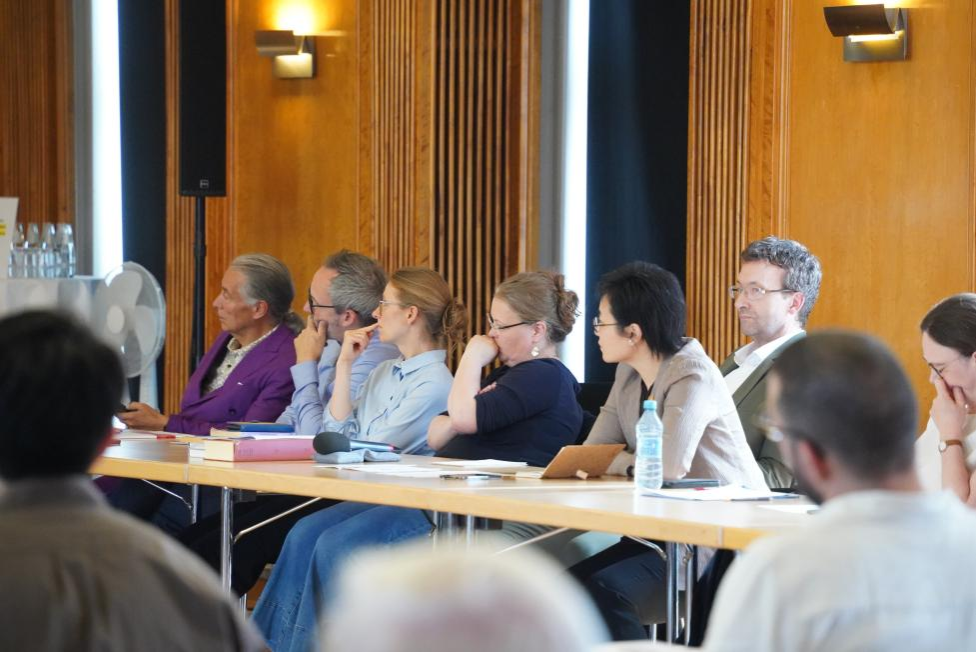
Currently, the protection, interpretation, restitution, and contemporary revitalization of cultural heritage have become focal concerns for both international academia and the public cultural sector. Against this backdrop, the Sino-German Intercultural Academic Symposium on "Interwoven Cultural Heritage: A Bridge for Cross-Cultural Connections" was successfully held on July 7, 2026, at the Berlin-Brandenburg Academy of Sciences and Humanities (BBAW). The symposium was initiated by Professor Ottmar Ette, a member of the Berlin-Brandenburg Academy of Sciences and Humanities, Chairman of the Prussian-Berlin Research Centre, and Director of the Humboldt Interdisciplinary Research Centre, and was jointly organized by the Prussian-Berlin Research Centre at BBAW and the Centre for the Study of Mutual Learning among Civilizations (EMLAC) at Xiamen University.
Centering on the theme of globally interwoven shared cultural heritage, the symposium addressed contemporary concerns such as the reconstruction of cultural memory, transnational archival collaboration, the restitution of cultural heritage, and the innovation of mechanisms for mutual learning among civilizations. It underscored the significant practical and academic value of intercultural research in understanding historical connections, facilitating knowledge mobility, and promoting international dialogue.
The symposium featured a distinctly international composition with robust Chinese participation. Scholars from China, Germany, Poland, Brazil, France, and other countries delivered thematic presentations, with writers and artists also in attendance, creating a cross-regional, cross-linguistic, and cross-disciplinary academic exchange. The active involvement of members from the Humboldt Interdisciplinary Research Centre further strengthened the symposium’s academic integration across Humboldt studies, intercultural research, and global heritage studies.
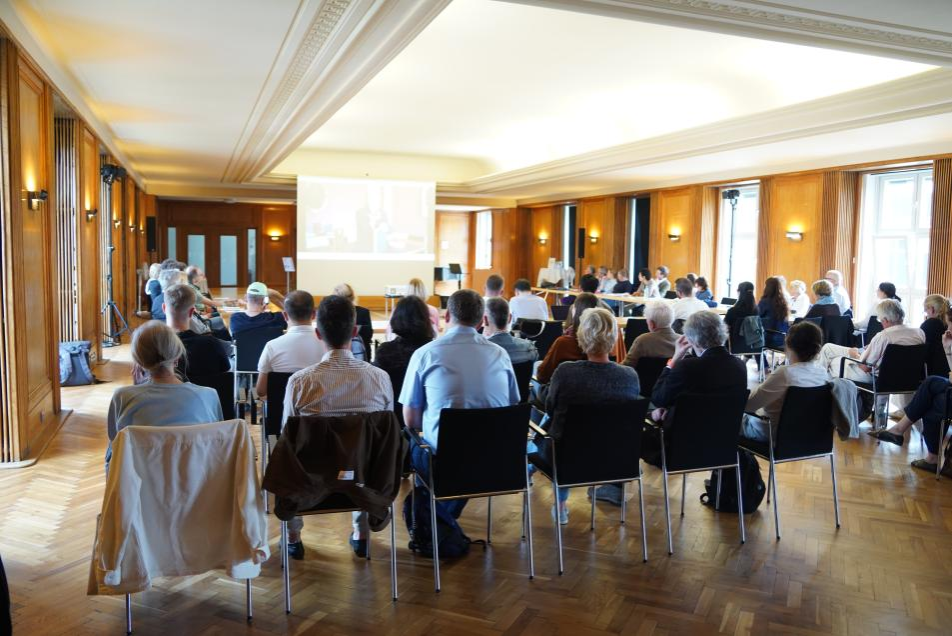
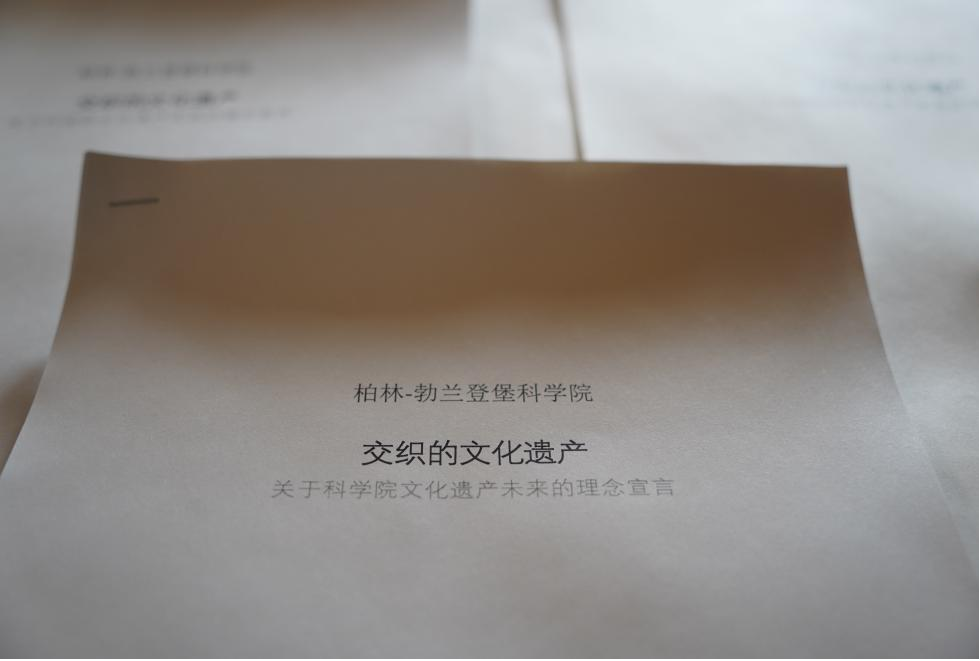
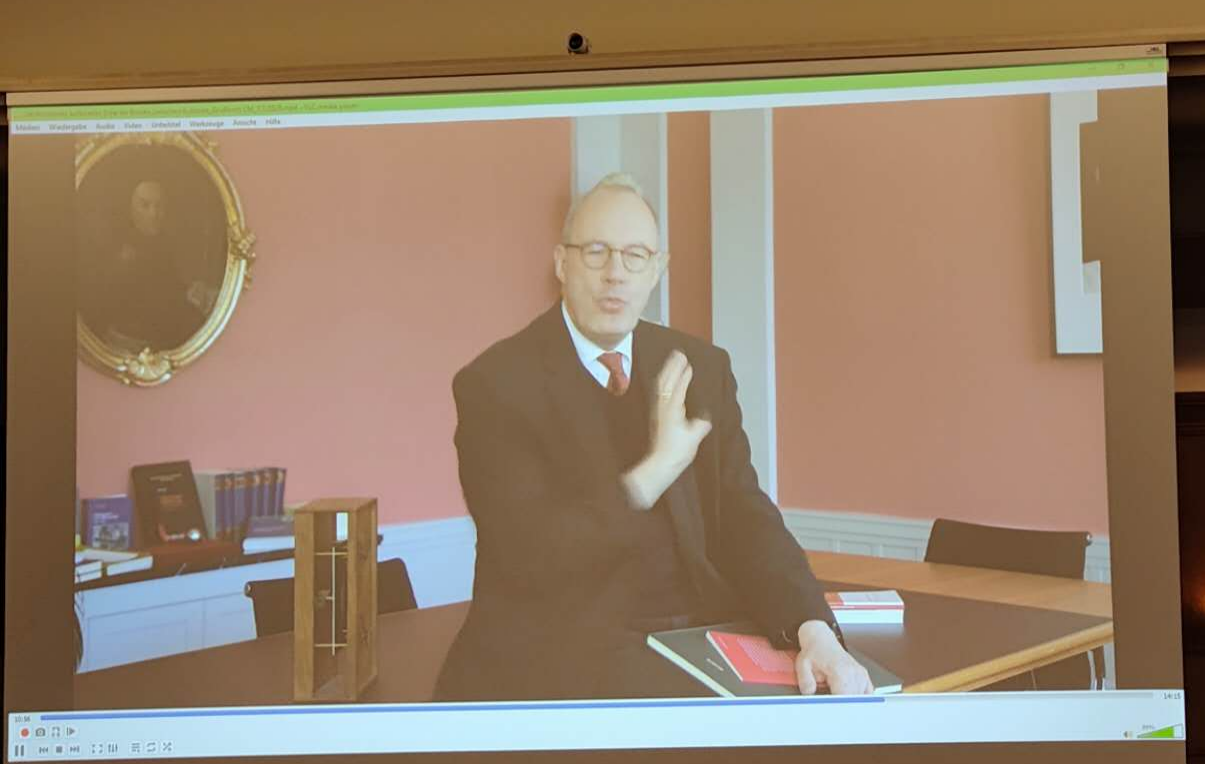
The symposium commenced with a video address by Professor Christoph Markschies, President of the Berlin-Brandenburg Academy of Sciences and Humanities. He extended congratulations on the successful organization of the symposium and, drawing on the Academy’s longstanding practices in humanities research, cultural heritage preservation, and cross-cultural knowledge production, elaborated on the significance of the theme "Interwoven Cultural Heritage." He also expressed hopes for dialogue between China and Europe and announced that the Academy’s manifesto would be published in a Chinese-language edition.
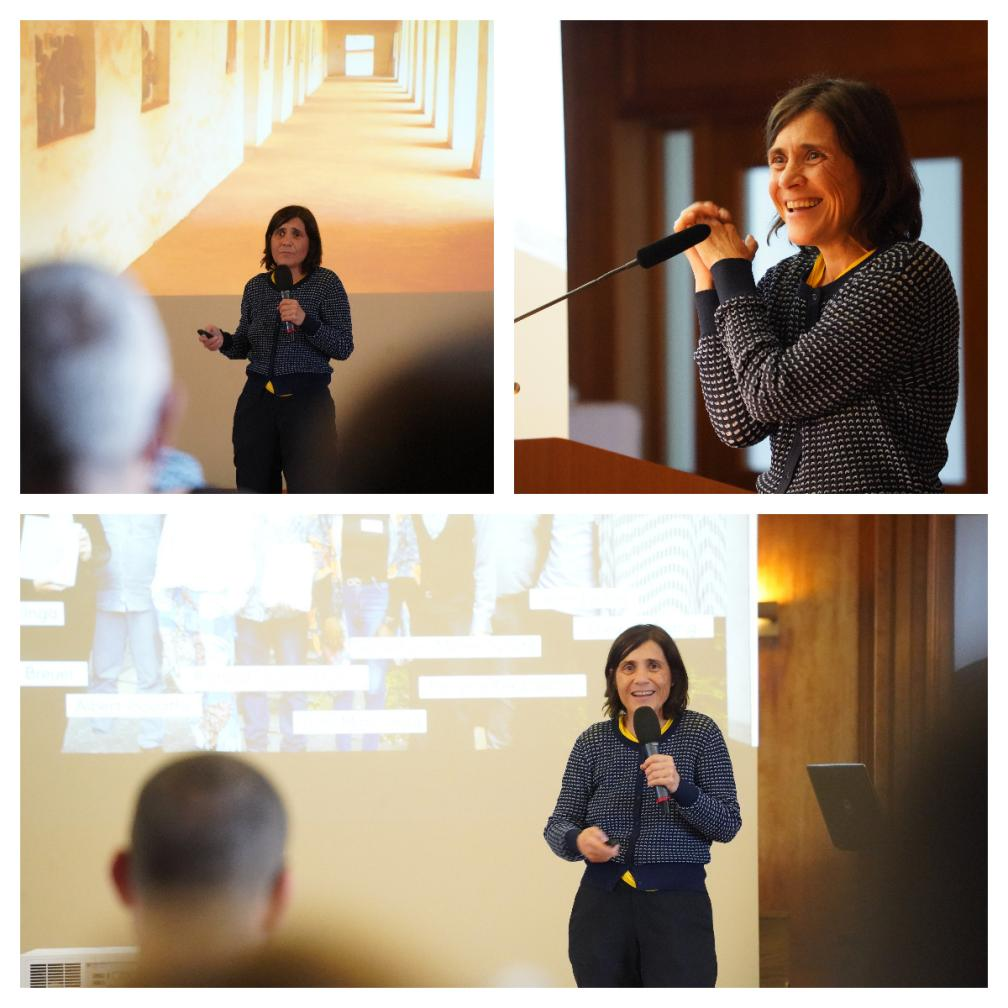
Following this, Professor Bénédicte Savoy, a member of the Berlin-Brandenburg Academy of Sciences and Humanities and a professor at Technische Universität Berlin, delivered the opening keynote address titled "Presence and Absence: Cultural Heritage in a Globalizing Perspective," formally launching the academic proceedings. Drawing on her long-term research on museum collections, colonial-era cultural transfers, and restitution, she re-examined the current condition of cultural heritage from a global perspective. She pointed out that many cultural heritage objects are physically "present" in European museums, storerooms, and exhibition halls, yet remain persistently "absent" from the social cognition, public memory, and historical consciousness of their places of origin. Thus, research on cultural heritage must ask not only where objects are located, but also how they arrived, why they remain, and who holds the right to view, interpret, and inherit them. Professor Savoy also noted that, given the concept of "interweaving" might obscure power asymmetries in colonial contexts, she proposed "circulation" as a supplementary analytical lens. However, she emphasized that "circulation" should not be understood as an equal or natural movement of culture, but must be re-examined within specific historical depths, structures of violence, and responsibilities for restitution.
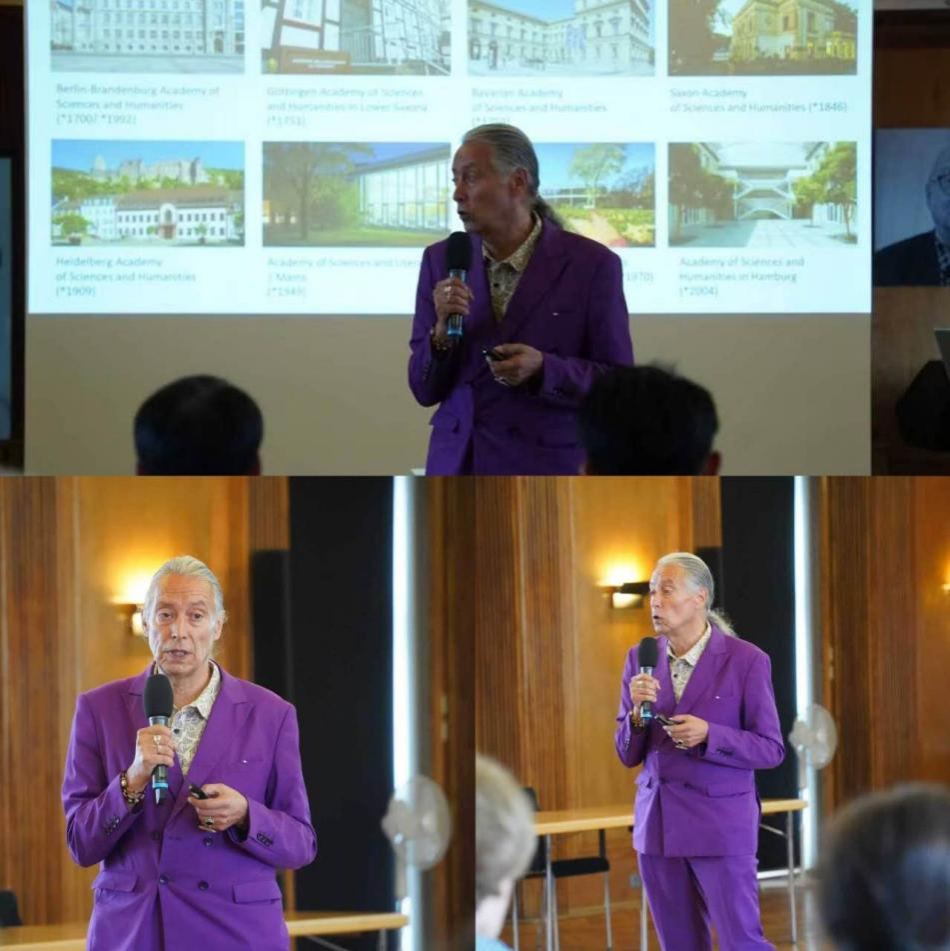
In the concluding session, Professor Ottmar Ette delivered a summary address. He offered a theoretical reflection on the symposium’s theme, focusing on knowledge production in the humanities, archival network development, and the future of Humboldt studies. He argued that the humanities should not merely perpetuate traditional subjects and methods, but must respond to new technological conditions, transnational academic networks, and social realities, rethinking their scholarly functions, cultural roles, and public value. As a key proponent of Humboldt research, Professor Ette took Alexander von Humboldt as an example, emphasizing that Humboldt was both a user of archives and a subject of archival study. Today’s Humboldt research, he suggested, should likewise transcend the archival boundaries of any single nation, institution, or discipline, promoting resource connectivity and collaborative knowledge-building across broader regions. His remarks vividly illustrated the Berlin-Brandenburg Academy’s commitment to open, comprehensive, and forward-looking academic ideals: the interconnection of different archives, the encounter of diverse scholarly traditions, and the mutual interpretation of varied cultural experiences can not only generate new knowledge about the past but also transform into creative forces for the future.
Notably, the presentations by Chinese scholars attracted particular attention during the thematic sessions. Both papers drew on specific regional experiences and contemporary cultural issues, bringing a Chinese perspective into the international intercultural research dialogue and demonstrating the proactive engagement and intellectual contributions of Chinese scholars in global heritage studies.
Professor Liu Yue, Associate Dean of the College of Foreign Languages and Cultures at Xiamen University, delivered a report centered on the concept of "the common," focusing on the formation, transmission, and reinvention of Sino-German shared cultural memories. Based on visible cultural remains in Xiamen, such as architecture and visual materials, and extending to deeper dimensions such as language, concepts, and historical memory, she illustrated how Sino-German cultural interactions have been sedimented into shared memory within Chinese local experience. The report concluded by advocating for continued Sino-German humanities exchange and cooperation through open academic networks, resource sharing, and multilateral collaboration.
Professor Ren Haiyan from the Humboldt Interdisciplinary Research Centre at Hunan Normal University took the unique local context of Changsha, Hunan Province, as her research entry point. Through two cultural heritage sites—the former site of the Shiwu School and the Xiangya Hospital—her report demonstrated how Changsha serves as a window for understanding Chinese modernity, examining the "traditional body," the "political body," and the "medical body" from ethical, political, medical, and modern perspectives. Her analysis revealed that the so-called "negotiated body" is not a relic of the past but a living reality in which traditional views of life, modern statehood, and medical knowledge continue to interact dynamically in contemporary Chinese society.
In addition, Professor Lin Chunjie and Lecturer Lei Lei from Huazhong University of Science and Technology, Lecturer Qiao Qingquan from the English Department of Hunan Normal University, and doctoral candidate Long Qiyu, a member of the Humboldt Interdisciplinary Research Centre, also actively participated in the event.
Other thematic reports similarly engaged with the core theme of "interwoven cultural heritage," offering responses from diverse regions, disciplines, and methodological perspectives. Dr. Tobias Kraft, project leader of "Humboldt in Travel – Science in Motion" at the Berlin-Brandenburg Academy of Sciences and Humanities, presented a three-dimensional framework of "past–present–future," combining digital practices with Humboldt’s textual heritage. He explored the role of digital humanities and artificial intelligence in the transformation of textual criticism, noting that while AI cannot replace the professional judgment of humanities scholars, it can optimize the processing of cultural heritage texts, advancing the field toward digital collaboration and team-based scholarship.
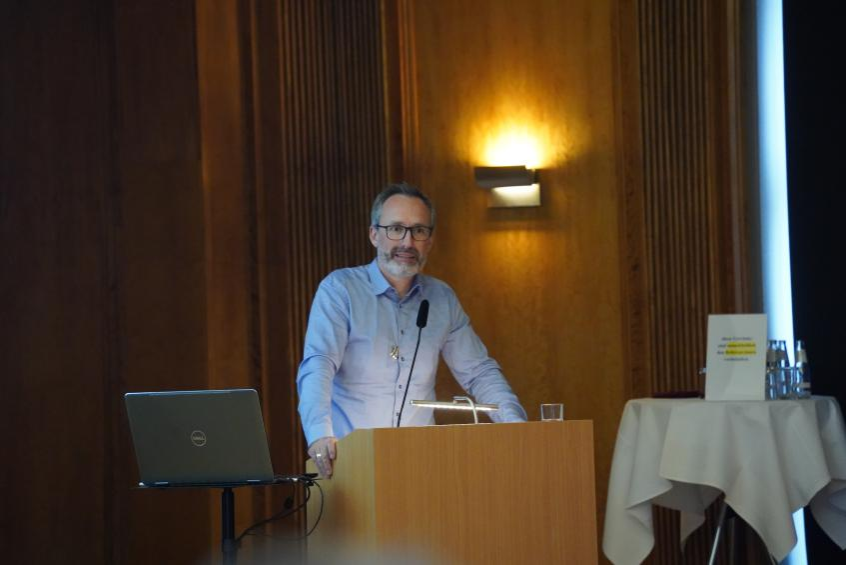
Dr. Sarah Schmidt, a researcher at the Berlin-Brandenburg Academy of Sciences and Humanities, focused on Schleiermacher’s translation theory, elucidating the gradual generation of thought, spirit, and cultural meaning in the translation process, and highlighting the relevance of classical translation theory for contemporary cross-cultural communication and literary transmission.
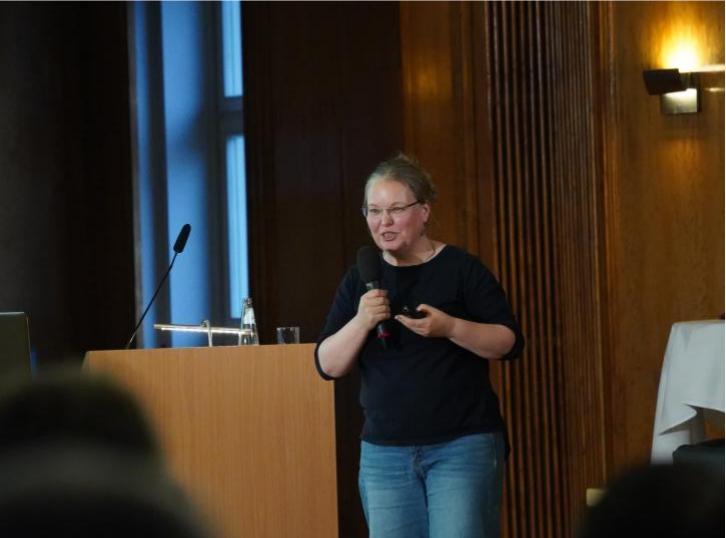
Dr. Annelie Große, also a researcher at the Academy, examined the court reception rituals for Chinese and Japanese legations in 19th-century Berlin, interpreting court ceremonies as significant sites for early modern European perceptions of East Asian cultures and revealing the cultural collisions and value negotiations in early Euro-Asian interactions.
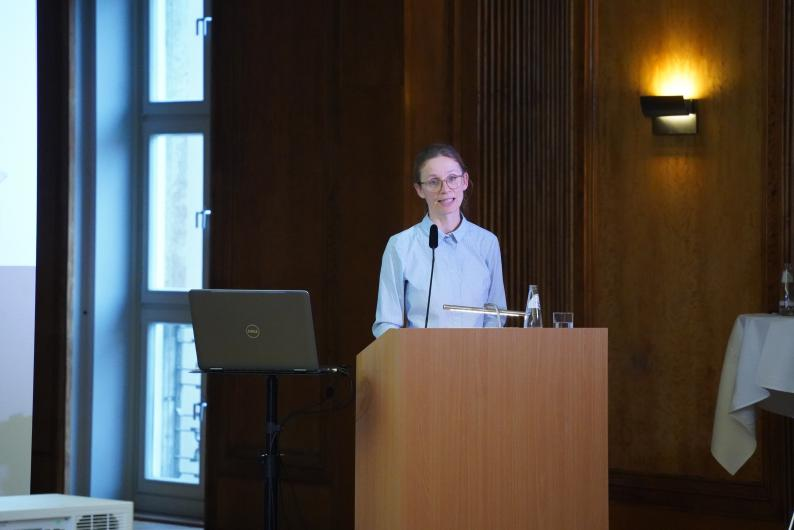
Professor Antonio Andrade from the Federal University of Rio de Janeiro addressed indigenous Latin American literature and cultural heritage, emphasizing the importance of indigenous literature in sustaining local knowledge, reconstructing cultural subjectivity, and resisting cultural amnesia, thereby broadening the symposium’s Global South perspective.
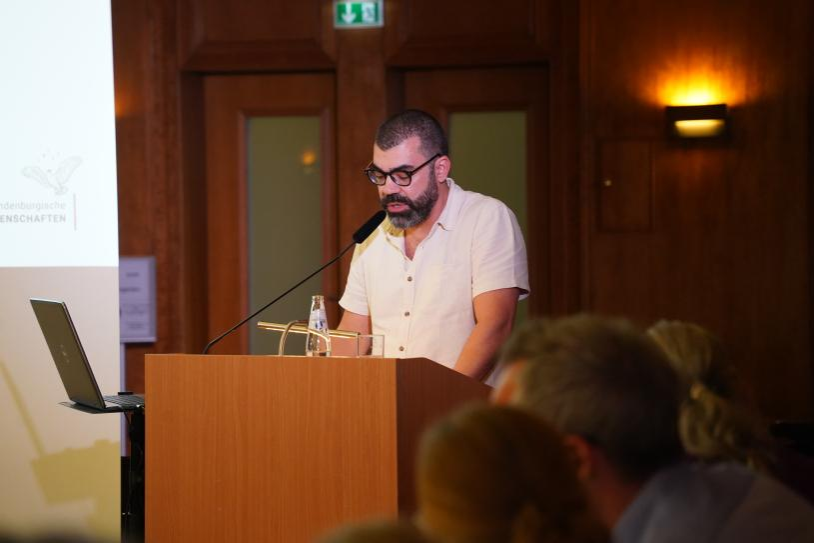
Researcher Jadwiga Kita-Huber from the Jagiellonian Library presented a case study of Berlin-related archival materials held in Kraków, Poland, illustrating the bridging value of transnational collections in connecting Central European cultures, activating archives, and fostering cross-institutional collaboration, and introduced the collaborative vision for a newly established intercultural research centre.
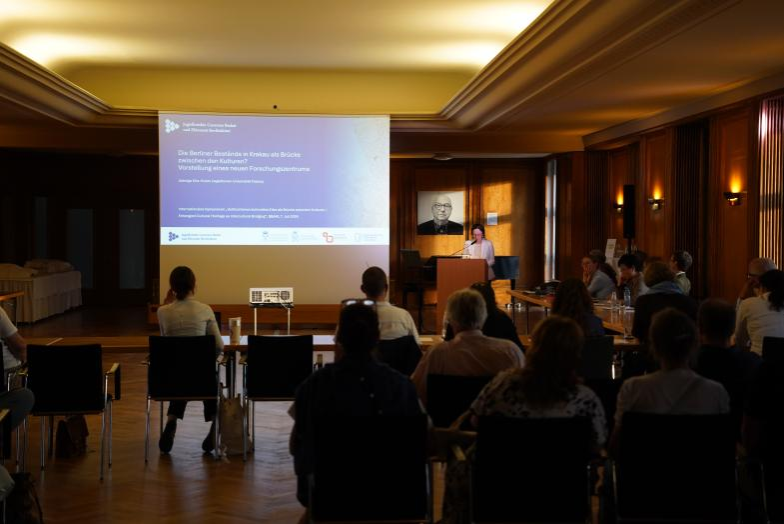
The symposium, centered on the theme of "interwoven cultural heritage," engaged in in-depth discussions on cutting-edge topics including cultural memory transmission, heritage interpretation, the future of philology, the reconstruction of classical translation theory, the networking of existing archives, and intercultural dialogue. It established an efficient academic dialogue and exchange platform in the humanities and social sciences between China and Germany. The proceedings demonstrated that cultural heritage is not an isolated, static historical relic, but an open network that continuously generates meaning through transnational circulation, archival connectivity, translation and transformation, local practices, and public communication. This symposium not only deepened Sino-German, Sino-European, and broader regional academic exchanges in the humanities, but also laid a conceptual foundation for subsequent international academic conferences in China. Looking ahead, all participating parties will continue to rely on an open and cooperative international academic network to advance the research, preservation, and revitalization of shared cultural heritage, making it a vital bridge for connecting civilizations, fostering collaborative knowledge-building, and responding to the challenges of our time. (Reporter: Long Qiyu)