Potsdam, May 4, 2026 – On the evening of May 4, a unique dual reading took place in the main auditorium of Building 5 on the Golm campus of the University of Potsdam. Prof. Dr. Ottmar Ette, Director of the Humboldt Center for Interdisciplinary Studies, Member of the Berlin-Brandenburg Academy of Sciences and Humanities, and Professor at the University of Potsdam, together with University President Prof. Dr. Oliver Günther, presented a joint reading and discussion on the theme "Freedom: Between Science, Perspective Shifts, and Democracy." Through readings, interpretations, and direct exchange with the audience, they explored the multiple meanings of freedom in academic research, literary imagination, and democratic society.
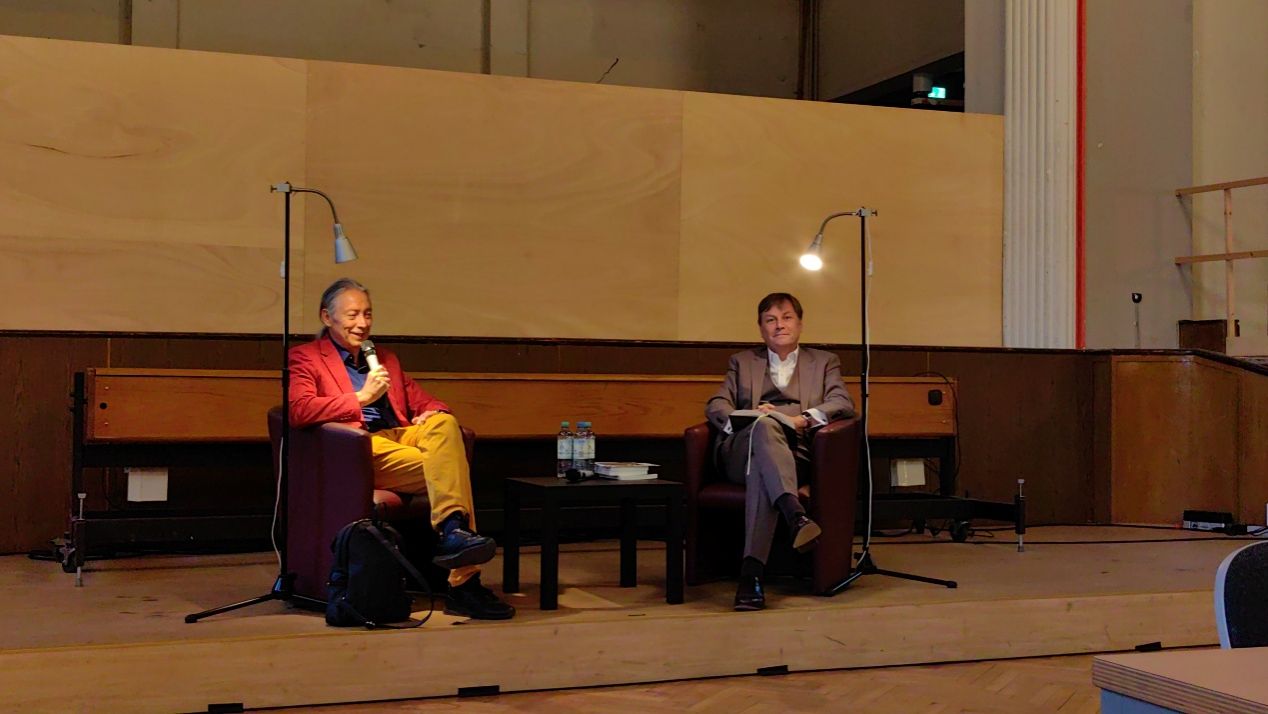
A distinctive feature of the event was the dialogic structure created by the dual reading. Both readers focused on the core theme of freedom, but approached it from different angles. President Günther, drawing on his book The Diverse University, reflected on the significance of freedom for knowledge production, scientific communities, and democratic society from the perspectives of academic research, scientific practice, and the public responsibility of universities. Prof. Ette, in turn, approached the theme from literature and fictional narrative, presenting excerpts from his novel WunderBunker and his work in progress Terrakotta. These texts explored the complex relationships between individual experience, historical memory, spatial transformation, and free imagination. Science and literature, empirical research and fictional narrative thus mirrored each other in the same space, enriching the theme of freedom with multiple layers.
The venue itself lent additional historical significance to the event. The Golm campus area has witnessed several phases of 20th-century German history: from military installations during the Nazi era, to post-war use by Soviet forces and East German institutions, and finally to its current role as a site for university teaching, research, and public discourse. Today's main auditorium in Building 5 stands at the center of this complex historical trajectory. Prof. Ette referred to it as the "Hall of a Thousand Years." As the auditorium is about to undergo renovation, this event marked its final use before reconstruction. A space carrying historical memory thus bid a symbolic farewell on its last evening with a dialogue on freedom, science, literature, and democracy.
During the event, Prof. Ette read selected passages from both his novels. A highlight was when President Günther read an excerpt from Prof. Ette's still-unfinished new work Terrakotta – the first time these passages were presented to a live audience. This reading also made the connection between the new work and the Golm location more evident. One character in the novel had studied at the Law School in Golm, and the text described details such as students wearing uniforms on campus, the confined institutional space, and the fact that they only took off their uniforms after leaving the premises.
Terrakotta traces historical developments from the Nazi period through the German Democratic Republic and the Federal Republic of Germany to post-reunification. Continuing Prof. Ette's characteristic approach of multiple perspectives and shifts in viewpoint, the new work emphasizes the importance of an "external perspective." For example, a peregrine falcon living in the tower of Berlin's Rotes Rathaus can freely cross borders and observe different spaces and historical sites from above. Through this non-human, mobile vantage point, the novel re-examines institutional changes, power structures, and individual fates in German history. The falcon sees Golm from the air, gradually approaches and enters this space, transforming Golm from a mere background location in the novel into a crucial literary setting for understanding turning points in modern German history.
Thus, the reading created a deep resonance among text, place, and history. A space once associated with military discipline, institutional control, and state power has become a venue for literary readings, academic discussions, and public exchange at a university. And Prof. Ette's new work, in this very historical setting, re-writes questions of borders, perspectives, memory, and freedom.
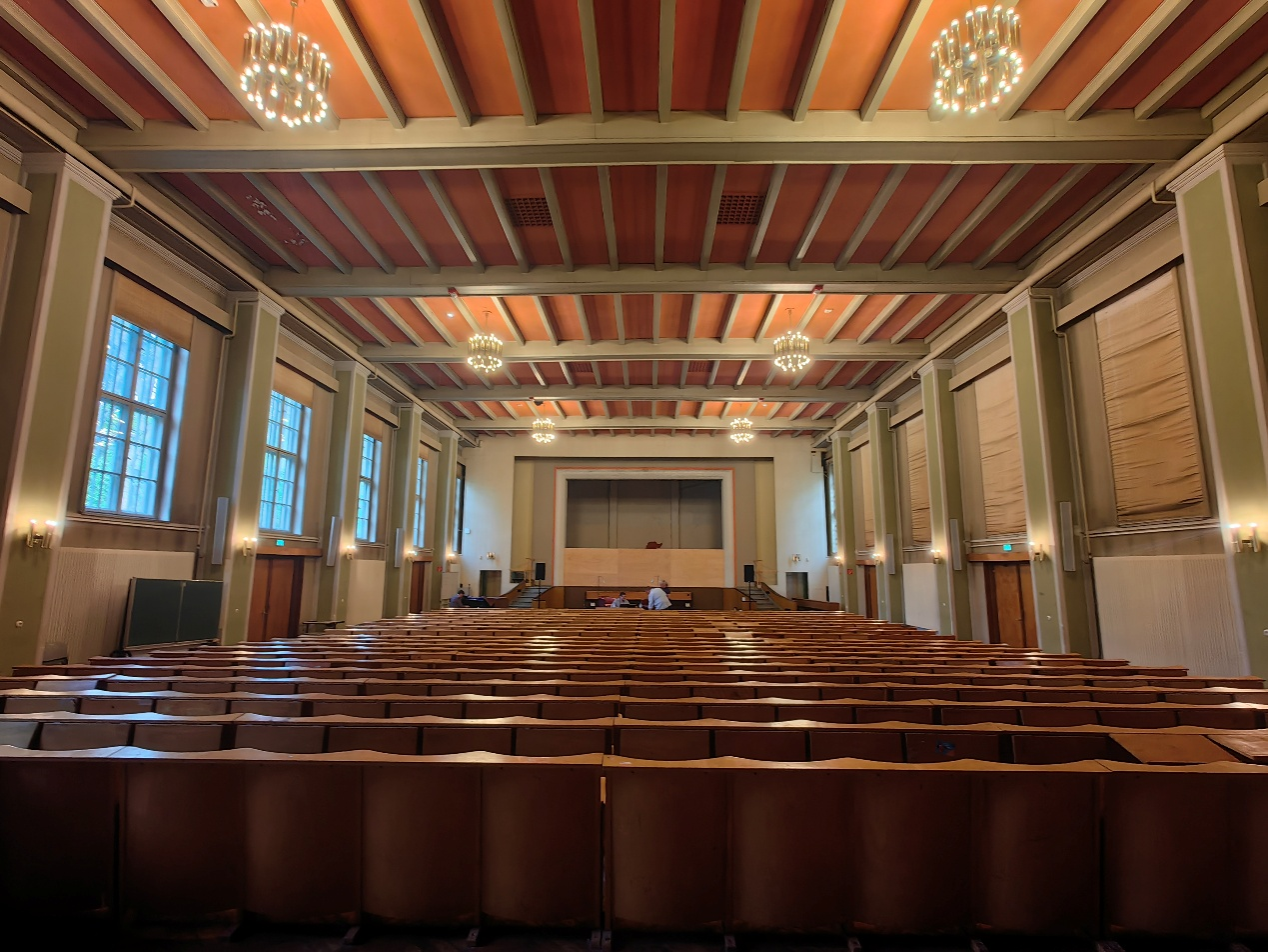
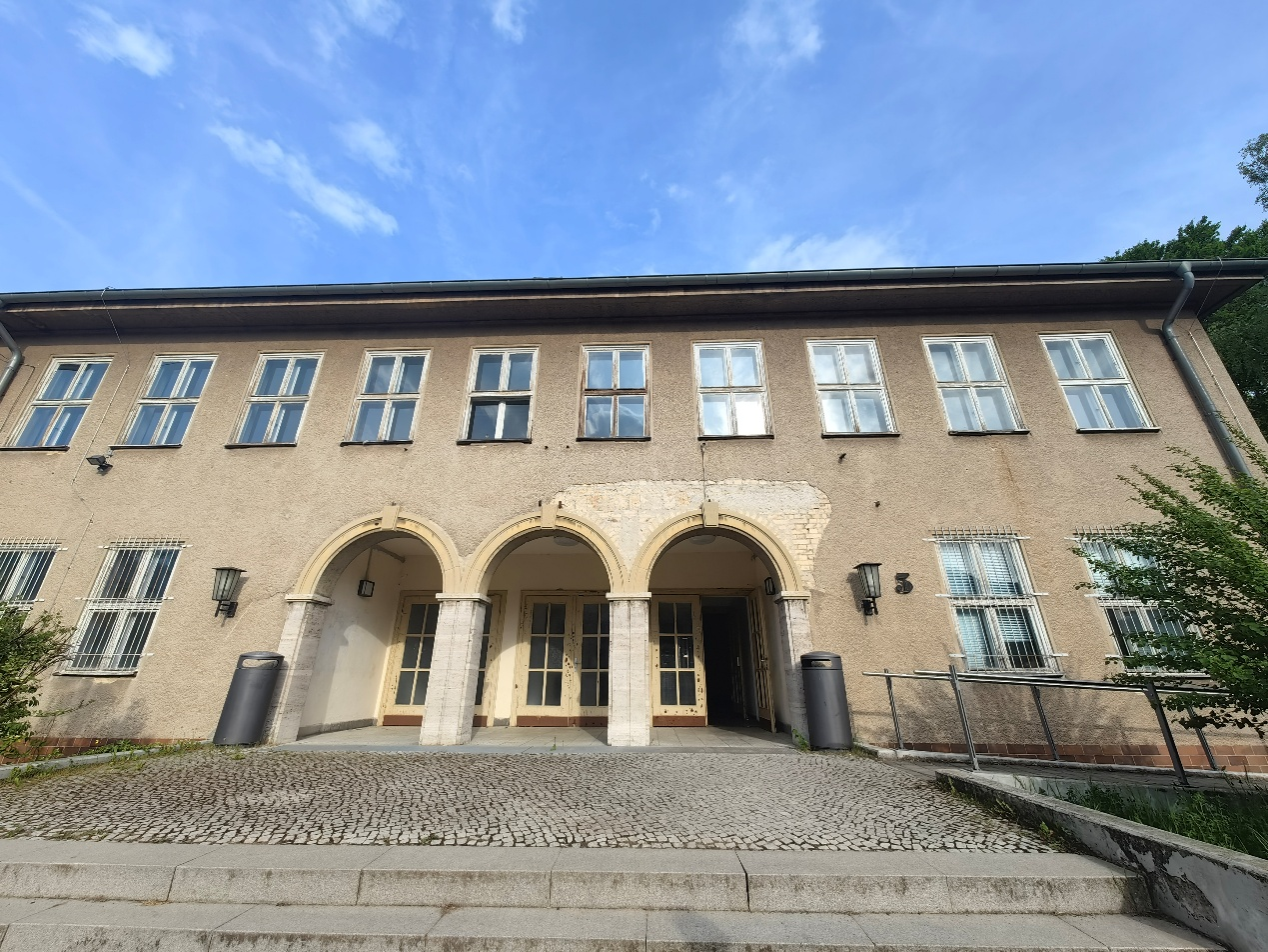
For the auditorium soon to be renovated, this dual reading was both a farewell and a new beginning. The old space is about to enter a new phase, while the discussions on history, freedom, democracy, and the responsibilities of the university continue. This event, through the convergence of academic thought, literary works, and historical site, left a memorable page for the final evening before the renovation of the Golm campus auditorium.