Xinhua, Rome, July 6 (Reporters Zhang Huan and Yang Yating) — A series of academic events titled “From a Shared History to a Shared Future: Intercultural Dialogue in China-Europe Relations” was recently held in Rome, Italy. Experts and scholars from Chinese and European universities, think tanks, and international organizations held in-depth discussions on topics including civilizational exchange between China and Europe, global governance, and academic cooperation.
The event was hosted by the renowned European publishing group De Gruyter Brill, and co-organized by the Center for Mutual Learning among Civilizations at Xiamen University, the School of Public Affairs and the French Research Institute at Zhejiang University, and the Center for International and Strategic Studies at LUISS University in Italy. During the event, the inaugural issue of Brill’s new journal Intercultural Dialogue, a special issue commemorating the 50th anniversary of China-EU diplomatic relations, was officially launched. De Gruyter Brill also announced a new book series, “Maritime Silk Road and Civilizational Exchange,” and formally established the “China-Europe Community for Mutual Learning among Civilizations.”
According to the organizers, the community brings together universities, research institutions, and independent scholars from China and Europe, with the aim of promoting long-term cooperation among China-Europe partners through academic exchange, joint research, co-publication, and conferences.
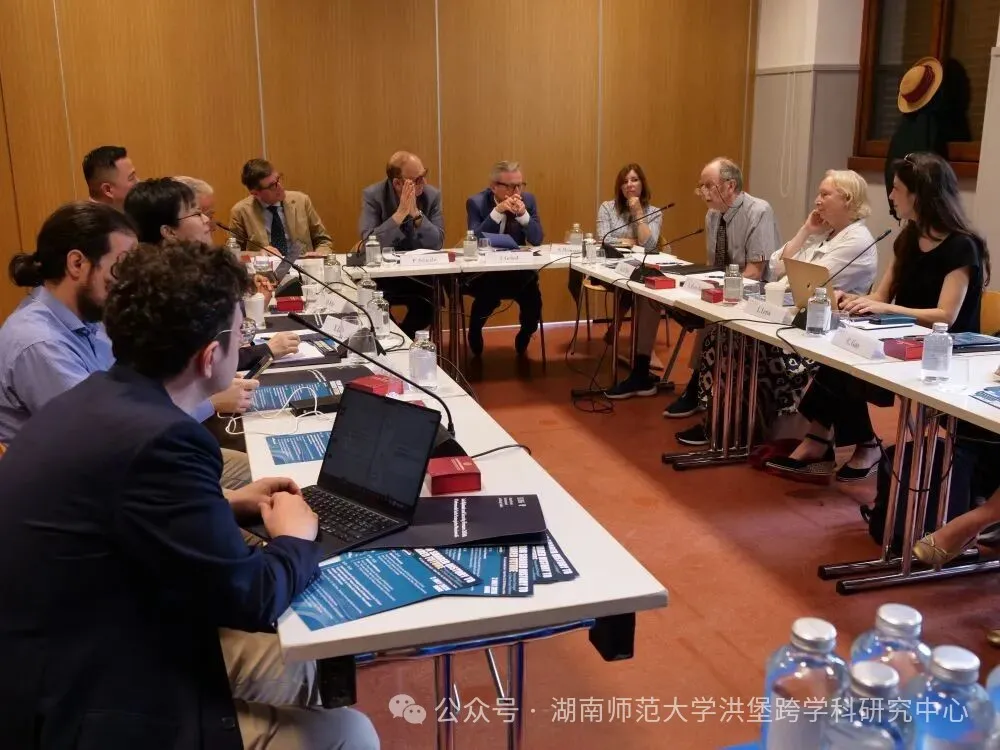
The photo shows the roundtable forum “From a Shared History to a Shared Future: Intercultural Dialogue in China-Europe Relations,” held on July 2. Xinhua photo, provided by interviewee.
Liu Yue, editor-in-chief of Intercultural Dialogue and professor at Xiamen University, said the journal aims to build a long-term, open international academic platform that brings together China-Europe scholars from different disciplinary backgrounds and promotes research on intercultural exchange. Shen Wei, guest editor of the inaugural issue and Qiushi Chair Professor at Zhejiang University, said that Rome, as an important city where different civilizations have long intersected, was a particularly meaningful location for the event. He expressed hope that sustained academic cooperation would enhance mutual understanding between China and Europe. Tiziana Lippiello, Rector of Ca’ Foscari University of Venice, said in a video address that she hoped Intercultural Dialogue and the “China-Europe Community for Mutual Learning among Civilizations” would become important platforms for deepening Europe-China academic cooperation, youth exchange, and mutual cultural learning.
In the keynote speech session, former UN Under-Secretary-General Pino Arlacchi said that the world is currently undergoing a significant adjustment in the pattern of Eurasian relations, and that dialogue among civilizations is more helpful than ideological confrontation in enabling the international community to understand contemporary China. He argued that China’s development experience offers useful insights for Europe as it rethinks national planning, the building of public institutions, and long-term economic strategy.
Thomas Geisel, Member of the European Parliament and former mayor of Düsseldorf, Germany, said that although China-Europe relations currently face some challenges, the two sides share broad common interests in areas such as trade, the economy, and people-to-people exchange. He called for open dialogue, mutual respect, and civilizational exchange in order to jointly address global challenges such as climate change, technological transformation, and international security.
At the subsequent roundtable forum, experts from Italy, Germany, and other countries discussed civilizational exchange between China and Europe. Participants noted that exchanges between China and Europe have a long history, and that the Silk Road was not only a trade route connecting Eurasia, but also an important link for exchange and mutual learning among different civilizations. In the face of the current international situation, strengthening historical research, deepening academic cooperation, and promoting cultural exchange will help enhance mutual understanding between China and Europe and provide new ideas for the long-term development of China-Europe relations.
Source:
https://h.xinhuaxmt.com/vh512/share/13183196?docid=13183196&newstype=1001&d=1352762&channel=weixin&time=1783327708867